
Portable Mixing Solutions: 5 Gallon Bucket Mixers and More
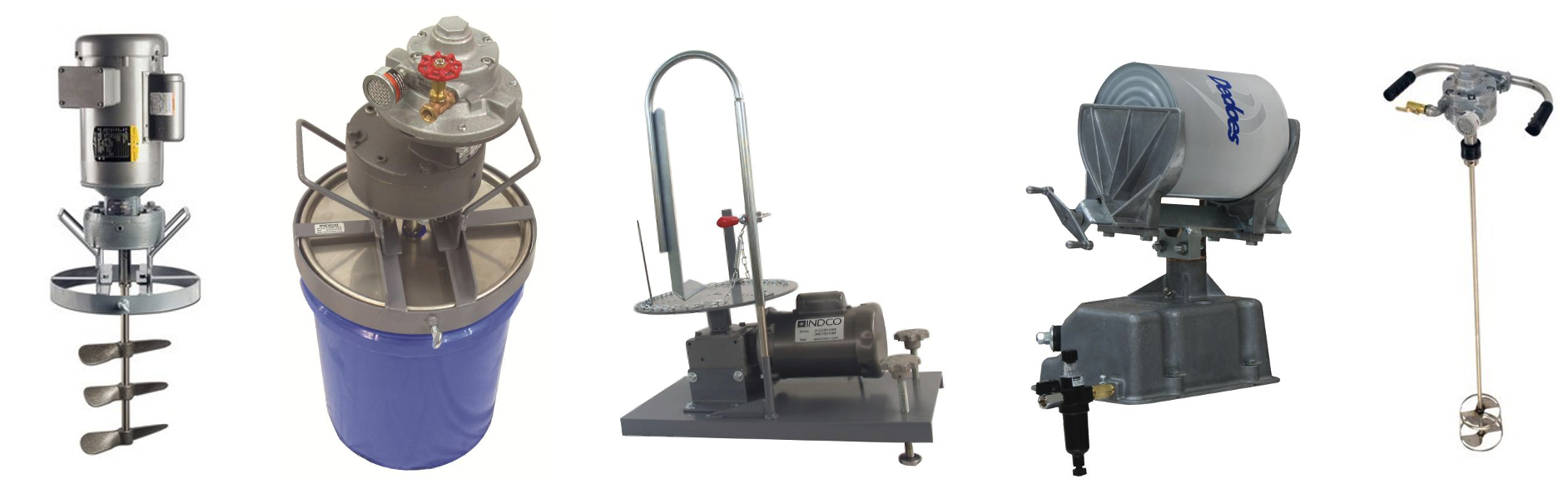
The right portable mixer isn’t just about mobility. It’s about getting reliable results in the containers and materials your team actually works with every day. For many operations, that means blending paints, coatings, varnishes, adhesives, sealants, resins, or polymers in 5-gallon pails without adding unnecessary labor or resulting in inconsistency.
As a container size, five-gallon pails sit in a useful middle ground. They’re large enough to support productive batch work, but still small enough to move easily around a plant or job site. That makes them one of the most common container formats for portable mixing, especially when a team needs a reliable portable industrial mixer that can travel with the job rather than forcing the job to move around the mixer.
At INDCO, we help customers choose the right portable mixing equipment based on viscosity, container type, facility considerations, and application goals. In many cases, the best solution isn’t simply “a mixer” but the right portable mixer for the container, material, and environment.
What to Consider Before Selecting a Portable Mixer
Before choosing a portable mixer, start with the product you’re mixing. A setup that works for a thinner coating may not perform well with heavier adhesives, high-solids sealants, resins, or polymers. That’s why selection should begin with application, viscosity, and container format, not just container type or mixer power alone.
Key questions to ask include:
- What is the material viscosity?
- Is the material shear sensitive?
- Is the product in a 5-gallon pail, drum, or IBC?
- Do you need open-container or closed-container mixing?
- Will the mixer stay in one area or move across multiple workstations?
- Do you need air power, electric power, or a more manual solution?
These questions help determine whether a ring mount unit, pail processing mixer, drum mixer, or other portable industrial mixer design makes the most sense. They also help you avoid overbuying equipment or choosing a mixer that creates unnecessary labor, waste, or inconsistency.
For teams working with hazardous materials, portability alone isn’t enough. The mixer must also fit your plant safety standards, process controls, and production requirements. In that way, the best portable mixer is the one that supports both performance and operational requirements.
5 Types of Mixers Used for 5-Gallon Buckets
Ring Mount Mixers
Ring Mount Mixers are designed to sit securely on a 5-gallon bucket and provide a stable, easy-to-use portable mixer option. They’re available in a range of horsepower ratings, commonly from 1/2 to 1-1/2 HP, and are offered in both air and electric motor types.
These mixers are a strong fit for plant teams that want a dependable pail mixer with a low center of gravity and easy setup. They’re especially useful for paints, coatings, varnishes, and other materials that need regular blending without complicated changeover.
Pail Processing Mixers
Pail Processing Mixers are often one of the most versatile options for 5-gallon containers. With horsepower options ranging from 1/2 to 1 1/2 HP, these mixers are available pre-configured for low-, medium-, and high-viscosity materials.
They’re a strong fit for operations working with paints, coatings, varnishes, adhesives, sealants, resins, and similar materials where batch consistency matters. For teams comparing portable mixing options across product lines, pail processing mixers are worth serious consideration because they can handle a broader range of conditions than many basic handheld tools.
Rotating Pail Scraper Mixers
Rotating pail scraper mixers are designed for dense mixtures and highly viscous liquids. In this setup, the bucket rotates while a stationary paddle scrapes the sides and bottom of the container, helping improve blend uniformity and reducing dead zones.
This style of portable mixer is especially useful for heavier adhesives, sealants, filled coatings, polymers, and other products that settle heavily or resist simple top-down mixing. It’s a practical choice when full-container agitation is more important than basic blending.
Closed Container Mixers
Closed container mixers are often a strong fit for paints, coatings, sealants, and similar materials that should remain sealed during mixing. In these cases, tumblers, rotators, shakers, and roller mills can help improve consistency while reducing mess, exposure, and cleanup.
Drill Attachment Mixers
Drill Attachment Mixers aren’t built specifically for 5-gallon pails, but they can be an effective and budget-conscious option for lighter-duty applications. They’re often used by teams that want improved consistency over hand mixing without moving immediately into a dedicated powered mixer.
For smaller operations, maintenance areas, or occasional use cases, drill attachments can be a practical first step. They’re especially best suited for low-viscosity materials or light blending tasks rather than thicker adhesives, sealants, or other demanding formulations that call for more torque and control.
Container-Specific Portable Mixer Recommendations
The best portable mixer depends heavily on both the container and the material you’re using. A 5-gallon pail, drum, and IBC each present different mixing challenges, especially when batch volume, viscosity, and mobility needs vary from one process to the next.
For 5-Gallon Pails
5-gallon pails are ideal for ring mount and pail processing solutions. They’re one of the most flexible container formats for daily use and are often a strong place to start if you need a compact portable mixer that’s easy to deploy and maintain.
They’re especially common in applications involving paints, coatings, varnishes, adhesives, sealants, and similar materials where portability and batch control both matter.
For Drums
Drums typically require longer shaft lengths, potentially higher torque, and more attention to mixing depth. If your process includes drum transfer or thicker materials, a standard drill attachment, pail or bucket mixer may not be enough. In many cases, you’ll want a heavier-duty portable mixer designed for deeper containers and more demanding blending conditions.
For IBCs
IBC mixing generally requires specialized equipment due to container size, batch volume, and material behavior. Teams should think beyond handheld tools and consider mixer configurations made for larger industrial containers. If your operation includes tote or IBC work, the right portable mixer needs to match the vessel geometry, batch demands, and product characteristics.
RELATED ARTICLE: https://www.indco.com/blog/indco/2013/06/11/solution-for-cutting-holes-in-pail-lids
Safety Checklist for Portable Mixing Operations
A portable mixer should improve productivity without creating unnecessary risk. Before startup, leadership and operators should verify the following:
- Make sure the container is properly secured before operation
- Check motor type, speed, and power supply compatibility
- Verify that the mixer is appropriate for the chemical environment
- Review ventilation and housekeeping requirements
- Confirm that operators are trained on startup, shutdown, and cleanup
- Inspect the mixer, shaft, and impeller for wear before each use
- Use the correct mixer style for open or closed containers
- Keep incompatible materials segregated during blending
- Follow plant-specific safety procedures and lockout/tagout practices where applicable
For facilities handling flammable or hazardous materials, the choice of portable mixer should be reviewed alongside safety and compliance requirements. The right equipment can help reduce exposure and improve process control at the same time.
Decision Tree: Choosing the Right Portable Industrial Mixer
A simple way to narrow down the best portable mixer is to ask a few practical questions in order:
- 5-gallon pail: consider ring mount, pail processing, or drill attachment mixers.
- Drum: look for heavier-duty portable drum mixing solutions.
- IBC: consider specialized tote or IBC mixing equipment.
2. What is the material like?
- Low viscosity: simpler mixer styles may be enough for thinner paints, coatings, or light liquids.
- Medium viscosity: pail processing or powered mixer options are often best for standard coatings, resins, and similar materials.
- High viscosity or settled solids: look for more torque, better impeller selection, or scraper-style mixing for adhesives, sealants, polymers, and other thicker products.
3. How often will it be used?
- Occasional use: a lower-cost portable industrial mixer or drill attachment may be sufficient.
- Daily or continuous use: invest in a dedicated mixer with the right durability and performance margin.
4. What is the operating environment?
- Clean, controlled area: more flexibility in mixer selection.
- Hazardous or flammable area: choose equipment that fits the safety profile of the plant.
This kind of decision tree helps teams avoid overcomplicating the selection process while still choosing a portable mixer that’s practical and scalable.
Portable Mixing Beyond Pails: Portable Mixer Solutions
Although we’re focusing on 5-gallon pail or bucket mixers, the same logic applies to other portable mixing needs. In some operations, a portable mixer may be part of a broader mixing program that includes larger container formats and field-use applications.
INDCO also supports customers working on larger or more specialized portable mixing projects across paints, coatings, adhesives, polymers, and related industrial applications where rugged equipment, mobility, and dependable performance matter.
That broader perspective matters for leadership teams because one mixer choice can affect productivity across the entire process, not just one container.
Why INDCO for Portable Mixer Solutions
INDCO offers more than a broad range of portable mixing equipment. We help customers evaluate the right solution based on material viscosity, container type, batch size, and operating environment.
Whether you’re comparing options for paints, coatings, adhesives, sealants, resins, or polymers, our team can help you choose equipment that fits the process instead of forcing the process to fit the equipment.
If you’re evaluating portable mixer options, INDCO can help with:
- Product selection based on viscosity and application
- Guidance on pail, drum, and larger container formats
- Practical support for open- and closed-container mixing
- Responsive service and application guidance when requirements are unclear
To explore options, browse INDCO’s pail mixer solutions. A good portable industrial mixer does more than blend material. It helps a facility work faster, reduce waste, improve consistency, and keep operators aligned with the realities of production. For 5-gallon pails, drums, and IBCs, the right equipment choice depends on container type, viscosity, use frequency, and the safety needs of the environment.
Need help choosing the right portable mixer for your material, container, or process? Contact INDCO for application guidance, browse our pail mixer solutions, or call 1-800-851-1049.
Learning Resources
- https://www.indco.com/blog/indco/2013/06/11/solution-for-cutting-holes-in-pail-lids
- https://www.indco.com/blog/indco/2021/04/08/when-to-make-the-switch-to-industrial-mixing-equipment
FAQ Section
- What is the best portable mixer for a 5-gallon pail?
- The best portable pail mixer can range from an economical drill attachment to a more specialized mixer designed for agitation in common sizes, such as 5 gallons. A wide variety of formats work effectively for low-viscosity or water-like materials, whereas more robust designs are required for more challenging materials. Examples include ring-mounted designs or pail mixers integrated into the pail lid itself.
- Can a portable mixer handle adhesives, resins, or polymers?
- Yes, a properly specified mixer matched to the physical properties of the batch materials will mix a wide range of products. For high-density or highly viscous liquids, a method to prevent the container from rotating may be required.
- When should you choose a high-viscosity pail mixer instead of a drill attachment?
- A pail mixer dedicated to higher-viscosity applications may feature a more robust anchoring or mounting method. The higher torque required for viscous use cases causes the pail or container to rotate if not accounted for in the mounting method design.
- What is the difference between an open-pail mixer and a closed-container mixer?
- An open container mixer uses a motor-driven rotating shaft with a mixing impeller that enters the top of the container. For pails, INDCO offers handheld, ring-mounted, and scraper-based designs. Closed-container mixing generally uses rotational or gyroscopic action to tumble the contents of a closed container, such as a pail or drum, resulting in a well-blended mixture.
- What should you consider before choosing a portable industrial mixer?
- Considerations include how easily or challenging the materials blend, whether the user must hold the mixer while operating, whether it is a drill attachment or a handheld solution, or whether the mixer must operate without being manually held. Additionally, the available power supply and the operating environment (hazardous materials) should be known prior to selection.